Vigyan Bhavan & Kempinski Ambience
10 - 14 February 2014
Delhi, India

Blog Archives For Blogs Tagged

A great deal of the World Congress on Agroforestry, held in New Delhi, focused on business: How to link smallholders to markets? How to make agroforestry profitable? How to engage major corporations? How to guarantee social and environmental sustainability while making money?
Some of the liveliest discussions involved high-profile executives and entrepreneurs, including a panel with Howard Shapiro, chief agricultural officer of Mars Inc.; Bernard Giraud, president of Danone’s Livelihoods Venture, Tristan Lecomte, founder and CEO of the Pur Project; and the noted Indian entrepreneur and sustainable-business advocate Ranjit Barthakur. In breakout sessions, we explored the viability of trees as crops, looked into biofuels as a reliable energy source and discussed quantification of environmental services.
A consistent message was that farmers can’t do it alone, especially if they’re also growing food for their families. Building successful agroforestry systems, requires scientific expertise, business savvy and access to markets, robust policies and infrastructure, and NGO support to advocate for farmers and help with training and facilitation. It’s a team effort, and it takes a lot of resources.
Read full blog
(published on the website of SIANI, Swedish International Agricultural Network Initiative)
—
Related Story:
Business – smallholder relationships: true commitment or false promises?

Landscape in Tanzania. Photo by Paul Stapleton/ICRAF
In order to realize implementation of a landscape approach, a dynamic combination and interaction of factors is involved. At a Landscape session during the World Congress on Agroforestry, discussions focused on key areas involving actual implementing case studies, need forsynergies between mitigation and adaptation in policy, innovative community-driven institutional platforms, and governance.
A comparative study looking at 191 Integrated Landscape Initiatives in Latin America and Africa showed that while in both regions the motivation for adopting landscape approach are sustainable environmental protection, enhancing food security and agricultural productivity; in Latin America, where the practice has been conducted for a longer time than Africa, incentives go further to include reducing negative agriculture impacts.
In both places, the initiative involves stakeholder groups, government, producers, marginalized groups and non-governmental organizations inside and outside the landscape. Groups studied cited tangible outcomes including improved skills and governance structures as success factors and lack of funding, proper infrastructure, proper policies, government and private sector involvement as challenges to a landscape approach.
In Sri Lanka, effort is underway to reclaim degraded land where forest has been cleared for tea and coffee farming since the 1800s. Challenges to deal with currently as the project is implemented include quick win commercial ventures and lack of native planting material.
When looking at policy frameworks that implement a landscape approach, emphasis was made on the need to synergize mitigation and adaptation as opposed to looking at the two streams separately. The example of environmental service in Suba, Ethiopia was used to illustrate the domino effect between the two approaches. For instance, failure to adapt to drought and flooding in the region creates a knock on effect on mitigation as communities are forced to move into productive forest areas where they clear the forest for increased farm productivity. On the other hand, failure to mitigate leads to high carbon emissions that in turn lead to either drought or flooding, making it harder to adapt. To synergize, multifunctional landscape level actions are needed.
In Eastern Uganda, innovation platforms that comprise ‘multi-stakeholder arrangements, innovation networks, coalitions or public-private partnerships’ have been adopted as institutional frameworks to foster community cohesion and collective action; yielding positive effects of increased livestock, tree cover and raised income levels.
In Mexico, a pilot study is testing the use of agroforestry as a conservation measure in protected areas, which would require reforms in political administration and land tenure for the most part.
To provide governance structures that are manageable, one presentation showed innovative territorial governance known as The Model Forest Landscape Approach as it is being carried out in 5 countries across six regions. Benefits of this particular innovation at a landscape level have provided resilient social infrastructure, effective experimentation, demonstration and practical knowledge sharing tools. It has also promoted regional dialogue as well as public – private partnerships and growth of local business.
Ensuing discussions at the session made it clear that the feasibility of landscape approaches largely hinge on favorable policy frameworks driven by political will and active involvement of all stakeholders; including specific targeting of the private sector, a move that has potential to inject new innovation and funding.
By Elizabeth Kahurani
Communications Manager, Environmental Services & ASB Partnership for the Tropical Forest Margins
Related links:
Landscape approach allows business to share risks and benefit

Farmers in Talensi, Ghana, regenerate their trees. Photo by Tony Rinaudo
The agroforestry system known as Farmer Managed Natural Regeneration (FMNR) is spreading rapidly and widely, but can this be explained by good science?
Science guides us on optimal species to promote, plant spacing, pruning methods, soil fertility impacts, moisture levels, annual crop yields and much more.
Science also explains important concepts relevant to FMNR, such as apical dominance (i.e. why the central stem of a plant grows more strongly than other side stems) and why such rapid growth from tree stumps is possible. But the reason why FMNR is being adopted on a very large scale is not primarily because we got the science right.
I believe FMNR is being adopted by tens of thousands of farmers in dozens of countries in Africa and Asia because it is a low cost, rapid and flexible tool which is in the hands of farmers.
FMNR enables farmers to respond quickly to their ever changing economic, environmental and social reality. They adapt this flexible tool, happily sacrificing ‘optimum output’ for the much more desirable outcome of yield/income stability.
Resource-poor, risk-averse farmers have to survive and want to thrive in a highly risky social-environmental-economic reality. Failure can literally mean disaster, even death so they opt for stability of yield/income over time rather than maximum yield in some years.
In 2013, Dr. Richard Stirzaker from the CSIRO in Australia wrote the following:
“I have followed the development of Farmer Managed Natural Regeneration (FMNR) since its very beginning in Niger during the early 1980’s. Thirty years later, independent scientists have hailed FMNR as contributing to the greatest positive transformation of the Sahel. I agree.
FMNR is a counter-intuitive idea. Traditional agroforestry has always tried to specify the ultimate tree-crop combination and arrangement that maximises complementarily. FMNR is based on a naturally regenerating suite of tree species, each growing where they are because they have demonstrated an ability to best exploit a specific niche and overcome prevailing constraints. The farmer then thins and selects from this ‘template’ that nature has produced. Farmers derive their livelihoods from cropping around the trees, cutting browse for animals, producing construction poles and firewood. The contribution each of these options make towards food security depends on current trees density, rainfall, availability of labour and the prevailing prices for the different products, providing food and income stability in a very variable environment.
I do not think that any research program, no matter how well funded, would have come up with the idea, because it expertly combines the subtleties of location specific tree selection with farmer specific opportunities and constraints.”
This is not an attack on good science, nor does it nullify the need for science to guide the targets that FMNR should move towards. It is a call to give greater emphasis on the real needs of farmers, to include them in the scientific method and even, sometimes, to follow their lead.
More information on FMNR can be found here: Farmer_Managed_Natural_Regeneration
A brief video explanation on FMNR can be found here: http://www.youtube.com/watch?v=E9DpptI4QGY
By Tony Rinaudo
R & D Advisor, Natural Resources
Food Security and Climate Change
World Vision Australia
tony.rinaudo@worldvision.com.au

Apples. Photo by Wolfgang Lonien
As Steve Jobs used to say, “People don’t know what they want until you show it to them.”
Agroforestry has what people want and need, in both the developing and developed world. Trees that improve crop yields, reduce greenhouse gas emissions, provide nutritious fruits, fodder for animals and fuel. The challenge lies in getting agroforestry adopted on a huge scale.
Eternal optimist Dennis Garrity, UNCCD Drylands Ambassador and former Director General of the World Agroforestry Centre addressed participants at the final day of the Congress saying “people will come to you if you have the right products.”
“Yes, we’ve had our failures,” said Garrity. “But these have helped us to produce dynamite products in agroforestry.”
In France, farmers are producing wheat with walnut trees. Agroforestry is increasingly being seen in Europe as a means for reducing the greenhouse gas emissions from agriculture. Agroforestry systems are being developed for the American corn belt.
In Niger, over 4 million hectares of croplands are now dominated by fertilizer-fodder-fuelwood trees through what is known as Farmer Managed Natural Regeneration (FMNR).
It seems there is a menu of agroforestry products – fertilizer, fodder, food and fuel trees – that farmers can select from, but how can this knowledge be better transferred from scientists to the grassroots level. Garrity says we have failed to get the hard-core aggies on board. “How many agronomists are in the room today?” he asked, to which a few scattered hands were raised.
“We need to reach out to the aggies, they need to know about what we are doing and they need to be coaxed.” Garrity is working hard to achieve this through Evergreen Agriculture which he describes as a brand that connects agroforestry with hard-core ‘aggies’ to scale-up trees on farms.
“African farmers are showing how trees can be successfully integrated into cropping systems. When will we catch up and fully deploy their insights?”
But as I alluded to earlier, Garrity is an optimist. He believes we are beginning to see a trend which will be at the heart of a truly sustainable planet: the ‘perennialization’ of agriculture.
“If we do our jobs well, we will see that perennialization is the key to meeting the new Sustainable Development Goals.”
Agroforestry science and development can make a crucial contribution to the Sustainable Development Goals which will soon replace the Millenium Development Goals. But this contribution can only be made through a massive effort in up-scaling agroforestry across the world.
According to Garrity, we need global maps of agroforestry, a global agroforestry assessment and a global plan for up-scaling agroforestry. Additional staff will be needed to link science with development and we must not forget the holy grail: genetic information on tree species.
An “upcoming global revolution in agroforestry up-scaling” is before us, says Garrity. We have to demonstrate that agroforestry really does have the products that millions of farmers across the world want and need.
“Be ambitious,” said Garrity told Congress participants. “We need more Steve Jobs’s in agroforestry.”
Photo by Wolfgang Lonien

Men carve a pattern from a paper template. Jepara, Central Java, Indonesia. Photo by Murdani Usman/CIFOR via Flickr
People in Europe buy furniture made from Indonesian timber. They want to know that the wood is harvested legally. New EU import rules will start soon. For farmers in Indonesia, it looks like more and more paperwork with no guarantee of new markets and better income.
The European Union has agreements called Forest Law Enforcement, Governance, and Trade (FLEGT) between itself and countries that grow tropical timber. New FLEGT rules from January 2014 will have an effect on regulations in Indonesia that govern how the 5 million or so smallholding timber growers on Java in Indonesia operate.
These smallholders produce most of the timber for the USD 1 billion worth of annual furniture exports. Their operations are already regulated to greater or lesser degrees along the entire length of the value chain, from choice of land and seedlings through harvest, sale, transport and manufacture to export. There are a number of organizations that support, or purport to support, smallholders navigate the maze of regulations and charges, adding further layers.
The set of rules through which FLEGT is implemented in Indonesia is called Sistem Verifikasi Legalitas Kayu (SVLK/Timber Legality Verification System). SVLK requires third-party auditing and licensing of timber legality for all timber products and the relationships between timber producers, craftsmen and the manufacturing industry.
As well, the Ministry of Forestry regulates ‘distribution notes’, which provide species-based verification, typically for timber from food-producing trees like rambutan and mango. There are also ‘self-usage distribution notes’ for timber from State land, which are based on the territory or respective administrative area. And then there is the one that smallholders are most familiar with: the Surat Keterangan Asal Usul Kayu or SKAU; this is both species- and territory-based verification for timber not produced on State land.
“The implicit challenge is to tailor licensing and regulation differently for different modes of production within a system that is already facing financial difficulties, especially at the smallholder level,” said James Erbaugh of the University of Michigan, who presented findings from his team’s research at the World Congress on Agroforestry in New Delhi, India, on 12 February 2014.
As it is, the SKAU requires a smallholder to report to the closest village head or forestry official who has been certified for SKAU approval. This official then conducts a physical examination of the timber to be transported. Then, the smallholder must complete a Location Verification form, which requires proof of land ownership. The verification receives a serial number upon publication and six copies of it must be delivered to specific officials and offices.
The research team observed that there was a mixed level of enforcement for this verification. Timber that was destined to go across the district boundaries often included the document, while timber that stayed within the district was less often accompanied by the document. They were unable to determine the extent to which the document was completed and enforced.
“It would probably be more effective to tackle the legitimacy of SKAU certification rather than relying exclusively on trying to verify that farmers and the wider industry were complying with it,” said Erbaugh. “The need for the whole SVLK system is not because of an absence of the verification of legality but because of the lack of legitimacy. Addressing this might circumvent certain problems that SVLK is bound to face.”
How the lack of legitimacy might be addressed the researchers didn’t say. Presumably through the provision of evidence to the EU by the Indonesian Government. Perhaps most importantly, the researchers did not look at whether new SVLK licenses have actually increased market access to new EU markets for local growers or not. If the system isn’t working now, will it work in the future? Probably only with serious reform at all levels.
By Robert Finlayson
—
Follow the Congress on Twitter #WCA2014 for live updates!

Agroforestry working group
A team of nine individuals from different agroforestry-related organizations worldwide will spearhead the formation of an organization that will facilitate cooperation and knowledge-sharing in this area.
The organization, the brainchild of the World Agroforestry Centre and the Indian Council of Agricultural Research, is expected to establish and manage an international secretariat which will coordinate activities in support of its members.
Interested founding members have been given up to three months from the close of the World Congress on Agroforestry to express their interest, through an email provided as a.temu@cgiar.com.
Other draft objectives of the organization include convening forums at different scales (global and regional) that promote agroforestry research and practice, actively engaging in international policy forums and debates that relate to agroforestry land use and providing platforms for its members to collaborate for mutual benefits.
The organization will also strive to promote publication and sharing of agroforestry research results and successful adoption and implementation.
“This organization aims to bring together national and regional agroforestry associations, research organisations, farmer groups, NGOs, corporations, universities and any individual with the common interest of transforming livelihoods and landscapes through agroforestry for a sustainable future,” said August Temu, one of the volunteers to the working group committee.
The Drafting Committee of nine distinguished individuals will develop and refine the Union’s charter. This Committee immediately sat down for its first meeting and agreed to work to an ambitious timetable. The charter they will work on will be opened for comments on 2 April. This period will conclude on 12 May, after which the Drafting Committee will formulate a final version for adoption by the founding members on 2nd June. This date is auspicious: it marks the opening day of the European Agroforestry Congress, to be held in Cottbus, Germany.
The members of the Drafting Committee are August Temu, Roger Leaky, Patrick Worms, Shibu Jose, Gregory Ormsby Mori, Mohan Kumar, Rosa Mosquera-Losada, Gillian Kabwe and Sumit Chaturvedi.
“In order to form such an international organization, you must have a charter in place, which is a legal document. We already have a draft charter ready with us,” said Temu.
It is expected that the organization will be in place later this year.
They welcome your contributions and comments, so drop them a line!
By Isaiah Esipisu & Patrick Worms

Bimbika Basnett speaking at WCA2014. Photo by Rob Finlayson/ICRAF
Development agencies and researchers have long assumed that rural women are victims. Not only of climate change but also nearly everything else. New research says these assumptions are without basis.
According to Bimbika Basnett, a researcher with the Center for International Forestry Research (CIFOR), the premise that women are victims of climate change rests on tenuous assumptions and weak empirical evidence. What’s more, there is a tendency amongst people researching gender and agroforestry to tabulate data that has been separated into male and female data and draw far-reaching conclusions from it.
“In a way, it’s welcome that women are being discussed in the climate-change area,” she said. “But when you look at the assumptions that the discussions are based on, they are wrong. They can lead to negative outcomes.”
The general argument is that poor and disadvantaged people are more vulnerable to climate change. Women are lumped into the category without question. However, men might be poor and vulnerable, too, and distinctions between the genders might be hard to correlate with vulnerability to climate change.
Yet in climate-change debates, the idea of women as victims is used to introduce wider issues of inequality. And because women are supposedly victims they can be mobilized to affect change. Basnett questioned where ideas like this came from and what sort of influence they had.
Recent research showed that there were two oft-repeated claims circulating in the sector: 1) Women are 70% of the poor; and 2) they are 14 times more likely than men to die in natural disasters.
There is no basis for either of these claims, says Basnett. ‘Data in developing countries is hard to get and of poor quality so how can someone reliably calculate the global percentage of poverty by gender? Second, there is no clear definition, anywhere, of what exactly is meant by “poverty”. Being poor in one country is different from being poor in another.
“Gender and poverty are usually separate issues in most countries and not exclusively the province of the rural poor. For example, in urban areas gender issues can be magnified, such as here in India, where female sex-selective abortion is more common in cities among wealthier people than in the countryside among the poor.”
Basnett also traced the source of the claim that women were 14 times more likely to die in a natural disaster. It was first aired as an anecdote in a workshop on natural hazards in 1994 and repeated without question thereafter for another decade.
Both these assumptions persisted even though they were wrong and no one had seen the original data.
“I think the uncritical acceptance of these statements, and the unquestioned “women are victims of climate change” argument, has been driven by the motivation to ensure that women and unequal power relations are included in policy discussions about climate change,” she said.
“People use this position to seek sympathy and strategic coalitions with those who privilege investing in women as a form of smart economics.”
This kind of thinking has negative effects, such as limiting the understanding of gender to stereotypes of women and men. It also weakens the credibility of gender research and encourages the implementation of policies that reproduce gender inequalities.
Basnett’s advice, not surprisingly, is that facts and figures should be investigated and not assumed. Second, there should be sound gender analyses conducted and, third, the approach used should be rights-based rather than instrumental.
Perhaps then women will be afforded the respect they deserve.
By Robert Finlayson
—
Related story
Gender is a many-splendoured thing
—
Follow the Congress on Twitter #WCA2014 for live updates!

Rubber agroforestry with coconut. Photo by Andi Prahmono/ICRAF
Smallholder farmers in Sumatra and Kalimantan in Indonesia are often reluctant to plant improved, high-yielding clonal rubber trees in their agroforestry systems. Dudi Iskandar from Agency for Assessment and Application of Technology, Indonesia, set out to figure out why.
According to Iskandar, in Sumatra and Kalimantan, 7 million farmers depend for their livelihoods on rubber, which is mostly grown in a traditional mixed farming system with unselected ‘jungle rubber’. With this system, the expected annual latex yield will only reach 590 kg/ha, far below rubber monocultures which can produce up to 1310 kg/ha over the same period.
This situation can be improved by applying a system called Rubber Agroforestry System (RAS), developed and introduced by the World Agroforestry Centre . Unlike the jungle rubber system, in which seedlings are unselected, RAS uses clonal rubber. With RAS farmers produce more rubber, continue to harvest other different products from the agroforestry system, while at the same time maintaining the landscape’s environment sustainability.
Despite the benefit it offers, however, the adoption of RAS is still limited.
“When it comes to clonal rubber, lots of farmers have difficulty in identifying it,” said Iskandar. “It is true that they really want to improve their systems’ productivity, which they realize can be achieved by using clonal rubber. But often they were fooled by seedling sellers, who stamp ordinary seedling as clonal rubber,” Iskandar told the congress.
“Later, when these trees don’t produce the desired yield, it makes farmers doubt clonal rubber.”
This is one factor that hinders the adoption, along with other factors such as incentives, income level, the establishment of demonstration plot and land-size.
Iskandar’s study, which looked at 223 rubber farmers in Jambi and West Kalimantan provinces, also found that farmers with incentives and higher incomes were more likely to adopt RAS, because buying clonal seedlings needs capital.
To support adoption, the establishment of demonstration plots is considered important, because farmers need to see the proof of the benefits of RAS.
“These are smallholder farmers who don’t have the liberty of taking many risks, so before they adopt it, they need to be sure that it actually works,” Iskandar explained.
“Therefore, RAS demonstration plots is the precise way to do so because it provides a visible ‘success story’, letting farmers see the evidence for themselves,” he pointed out.
Iskandar added that RAS is considered as a good option to increase yields, specifically when the farming area is narrow.
Furthermore, Iskandar recommended that the government provides more support to smallholder farmers, such as access to information, credit, loans, as well as incentives in the form of provision of genuine clonal seedlings, fertilizers and pesticides.
“There is also the possibility to build the incentives farmers are longing for into payments for environmental services (PES),” he added.
By Enggar Paramita
—
Follow the Congress on Twitter #WCA2014 for live updates!

Farmer training in Bulukumba, South Sulawesi.
Photo by Enggar Paramita/ICRAF
Farmer to farmer communication might be the most effective way to ensure widespread adoption of agroforestry.
“Often farmers don’t have access to research being disseminated by extension services, so they learn from other successful farmers,” explained Endri Martini of the World Agroforestry Centre (ICRAF) during a session at a session on ‘Bridging Science and Development’ at World Congress on Agroforestry.
When Martini and colleagues asked farmers in Sulawesi, Indonesia what was their most effective source of information on agriculture, they rated other farmers ahead of extension agents.
People from the villages they studied in South Sulawesi and Southeast Sulawesi got roughly half their information about agriculture, health and education from inside the village (such as through village leaders, farmer groups, friends and family) and half from outside the village (e.g. media, government agencies, projects and people from other villages).
Men tended to get more information from outside the village than women because men have more opportunities to visit other areas.
Farmers said they adopted the top 3 favoured agroforestry innovations (planting new species in agroforestry systems, vegetative propagation and gaining access to improved planting material) equally from farmers or farmer groups and agroforestry projects. Only 4 percent said they had adopted these through extension agents.
Recognizing the important role of farmer to farmer communication, the World Agroforestry Centre has begun running farmer field schools as part of its work in Sulawesi. They have identified lead farmers who can disseminate innovation and organized cross-visits between successful and struggling farmers.
“Farmer to farmer communication is particularly crucial in areas that extension agents rarely visit, where language is a barrier and where there is poor infrastructure,” says Martini.
Her presentation struck a chord with participants at a session that included a range of other presentations addressing why it is that science often does not have the envisaged impact on development.
Christian Borgemeister suggested there are 3 factors needed for science to trigger development: transdisciplinary research, capacity development and symmetrical partnerships.
Tatiana Deane de Abreu Sá who works on agroforestry systems in the Brazilian Amazon also emphasized the need for many disciplines to be involved, in addition to effective collaborations with farmers.
In scaling-up Evergreen Agriculture in Africa, GIZ and ICRAF rely on partnerships with a wide range of stakeholders to reduce barriers and spread the science to farmers. In Ethiopia, greasing the wheels for up-scaling the use of Faidherbia albida (a fertilizer tree) from 1 to 2 million farms will require a “multistakeholder and multidisciplinary approach,” say Joerg Lohmann and Alice Muller.
So, should the dissemination of agroforestry innovation be left to farmers?
Martini believes that improving communication between farmers, agroforestry research agencies and local governments holds the key to providing the information which is needed to extend agroforestry across Sulawesi and indeed Indonesia.
As Borgemeister pointed out, “We need more solution-oriented research.” Listening to farmers and their needs is crucial. Innovation doesn’t always start with science.
By Kate Langford
—
Further reading
Abstract of Endri Martini’s presentation
Kiptot E, Franzel S (2013). Voluntarism as an investment in human, social and financial capital: evidence from a farmer-to-farmer extension program in Kenya. Agriculture and Human Values.
—
Related stories
Volunteer farmers transforming East Africa’s dairy sector
—
Follow the Congress on Twitter #WCA2014 for live updates!

The towering eucalyptus trees can drain and clean up waste water. Photo by Isaiah Esipisu
Eucalyptus, which is arguably among the most maligned tree species for its thirsty nature, has now been found to be a most eco-friendly plant for rehabilitating waterlogged areas, through method known as bio-drainage.
In a study presented at the ongoing World Congress on Agroforestry in New Delhi India, Jagdish Dagar, from the Emeritus Scientist Soil Salinity Research Institute in India, pointed out that “pumping of excess soil water by deep rooted plants using bio-energy is a viable alternative to subsurface drainage.”
Apart from being costly, the scientist said that subsurface drainage has been linked to environmental pollution.
Effectiveness of block plantations of Eucalyptus tereticornis was evident in Indira Gandhi Nahar Paryojana area, where the scientists managed to reduce ground water under the block plantation by 15.7 m over a period of six years, enabling farmers to plant wheat and other food crops.
From a different study, Dr Paramjit Singh Minhas, director of the National Institute of Abiotic Stress Management presented research findings that eucalyptus trees can be used to get rid of raw sewage and other forms of wastewater in an eco-friendly manner.
Eucalyptus trees have long been blamed for their ‘thirst’ for ground water, owing to their long taproots, and there is scientific evidence that the species could dry up water bodies.
“Under normal circumstances, eucalyptus trees can lose water four to seven times more than pastures depending on the method used and conditions on the site such as the type of soil, amount of rainfall among other factors,” Dr Minhas told the Congress session.
But the scientists at the Congress have given evidence to show that when exposed to wastewater, eucalyptus plantations can remove toxic metals, since the trees are known to sequester, tolerate and accumulate high levels of various heavy metals.
According to the researcher, developing ‘green belts’ around cities with forest trees under wastewater irrigation will help revive the ecological balance and improve the environment.
The researchers term these agroforestry systems ‘High Transpiration Rate Systems (HRTS)’ for the treatment of wastewater
Apart from putting waste water to use, the trees, especially the hybrid varieties, can produce timber and good fuelwood. Furthermore, eucalyptus are among the best sequesters of carbon from the atmosphere.
According to Dr Dagar, the carbon content in the dry biomass of about 240 Eucalyptus tereticornis species amounted to 15.5 tons per hectare on average.
However, Dr Minhas pointed out that bio-drainage methods were long term, and needed a lot of investment. “Though engineering approaches like surface and subsurface drainage have been standardized for rehabilitating the saline waterlogged soils, their adoption on large scale is hindered by high capital investment, associated operational and maintenance problems in addition to suitable alternatives for drainage water disposal,” said the scientist.
According to Rajbir Singh, one of the major concerns with this bio-drainage system has to do with agricultural land being turned over to non-food trees.
He further notes that the bio-drainage tree areas can become natural habitats for birds, some of which are harmful to crops that being gown on adjacent agricultural land.
—
By Isaiah Esipisu
Related stories
Using eucalyptus trees to drain wastewater, improve the environment

Shri Pranab Mukherjee, the Honorable President of India, opened the World Congress on Agroforestry on 10 February 2014. Photo by Ram Singh/ICRAF
There is a sanskrit verse that includes the words ‘ten sons are equal to one tree’. If India is to achieve its ambitious goal of 33 per cent tree cover through agroforestry, then a great many sons (and daughters too) need to be involved.
Today the World Congress on Agroforestry opened in Delhi, India with President the Honorable Shri Pranab Mukherjee saying to the 1,000 delegates gathered: “The cylinders can no longer remain idle; it is time to fire”.
Shri Mukherjee announced a landmark National Agroforestry Policy for India which is aimed at not just increasing tree cover, but providing multiple livelihood and environmental benefits.
The policy is expected to benefit the country’s farmers through incentives for agroforestry, insurance schemes and greater access to markets for agroforestry products.
According to President Mukherjee, the policy will enable farmers to reap the benefits of agroforestry, including sustainable crop production, improved livelihoods, stable ecosystems and resilient cropping and farming systems.
He particularly pointed out the role of agroforestry in climate change mitigation, saying “2014 should be a defining moment for tree-based systems to address climate change.” Certain agroforestry systems have been proven to sequester as much carbon in below-ground biomass as primary forests, and far greater than cropping and grassland systems.
Agroforestry is not new to India, having been practiced for generations. But the full potential of agroforestry has not been realized for many reasons. Among these are adverse policies, legal constraints, inadequate investments, weak markets and a dearth of institutional finance.
In India, as in many other countries, the mandate for agroforestry has fallen through the cracks in various ministries, departments, agencies and state governments.
The new policy brings together all the sons and daughters (i.e. ministries, institutions, programs, agencies and farmers) needed for an agroforestry revolution. It will see the establishment of a new Mission or Board dedicated to agroforestry. Regulatory mechanisms relating to agroforestry produce will be overhauled, sound databases and information systems developed and considerable new investment made in research, extension and capacity building. Greater industry involvement is also a major target.
The policy comes at a time when trees outside forests are becoming increasingly important for India. An estimated 65 per cent of the country’s timber and almost half of its fuel wood comes from trees grown on farms.
With India’s ever expanding population and increasing competition for land and water resources, agroforestry is viewed as having enormous potential to supply nutritious foods, fodder, firewood and timber.
Hopefully this new policy will provide the necessary incentives and remove obstacles so that agroforestry can be adopted with enthusiasm and confidence by farmers across the country.
By Kate Langford
—
Related articles
Business Daily India: Cabinet approves national policy on agroforestry
President inaugurates World Congress on Agro-forestry and presents Krishi Karman Awards

Healthy agroforestry system
In the recent past Malawi has attracted global attention following huge gains in maize yields that were supported by the introduction of a fertilizer subsidy program in 2005. Now, a new study shows that integrating particular species of nitrogen-fixing trees in maize fields can raise the staple crop’s yield by up to 14 percent, comparable to the gains farmers obtain using subsidized fertilizers.
Viola Glenn from the Research Triangle Institute International in the USA and co-researchers will present these new findings at the World Congress on Agroforestry. They say these results mean that this agroforestry system could sustainably replace the ongoing Farm Input Subsidy Program in the country in case its financing ceases.
According to Glenn and her team, the agronomic and political stability of the fertilizer subsidy program are increasingly being called into question, as Malawi faces recurrent weather-related crop losses of late. They note that similar a program has been discontinued in Zambia due to the financial strain on government funds.
“Agroforestry offers an alternative method to improve crop yields and resilience to climate and weather at a relatively minimal cost,” Glenn and her team say in an abstract to the Congress titled ‘Revitalizing African agriculture from the ground up: A case study of soil fertility, fertilizer subsidy and agroforestry.’
The researchers collected data in a household survey of 390 farms in Malawi to assess the impact of the ‘fertilizer tree’ species Faidherbia albida on maize yield, and found an increase of 12 to 14 percent (169–201 kg) per hectare. Though lower than the yield increases recorded in experimental settings, this gain was greater than or equivalent to that recorded using fertilizer purchased under the subsidy program.
However, the scientists point out that farmers’ adoption of agroforestry in Malawi has been slower than their uptake of the fertilizer subsidies. One of the reasons for this, according to the researchers, is that agroforestry implementation can be expected to increase on-farm labor demand by 11 to 14 percent around the time of tree establishment. (However, maintaining well established agroforestry farms requires additional labour of just around one percent.)
During the survey, a ranking exercise identified ‘system flexibility’ and ‘compatibility with existing systems’ as the most important decision criteria in agroforestry adoption. The researchers therefore recommend that efforts to expand the use of this agroforestry system focus on these two areas, rather than focusing mainly on economic profitability.
Separate long-term studies by World Agroforestry Centre (ICRAF) and partners has shown the ability of fertilizer trees to not only raise maize yields, but also stabilize them over time. Overall, is a growing body of evidence that incorporating trees into agricultural landscapes is part of the solution to meeting the challenge of climate change.
By Isaiah Esipisu
Related links:
- Agroforestry for food nutrition security in Africa
- Trees and food security in Africa; what’s the link?
- Farming Trees, Banishing Hunger: How an agroforestry programme is helping smallholders in Malawi to grow more food and improve their livelihoods [PDF Download]

Agroforestry can enhance pasture production
In times of drought, pastoralists are among the groups hardest hit, when lack of fodder threatens their main source of livelihoods — their livestock. But researchers say agroforestry can be used to generate enough pasture to see livestock during dry spells.
In an abstract to the upcoming World Congress on Agroforestry titled ‘Improving productivity of common grazing resources in hot arid region of India through participatory pasture development,’ Arun Misra of the Central Arid Zone Research Institute (CAZRI) in India and co-researchers say planting particular drought-tolerant tree species can provide pasture to sustain livestock through a “drought window.”
In a trial on a total of 56 hectares of common lands in four different areas in India, the researchers intercropped two common grass species (Cenchrus setigerus and Lasiurus sindicus) with four drought-tolerant tree species (Acacia senegal, Acacia tortilis, Azadirachta indica and Prosopis cineraria).
After three years of establishment, productivity of the common lands rose to between 1.5 and 2.7 tons of dry fodder per hectare. This was a huge improvement on natural pasture, which produced just 0.5 tons per hectare.
The harvested dry biomass was chopped and stored as ‘fodder bank,’ and made available to the most vulnerable sections of the society during the subsequent drought period.
In another paper at the Congress, researchers from Tamil Nadu Agricultural University will discuss silvipasture models for meeting fodder requirements. The scientists say tree-grass intercrops were able to improve fodder yield. Their study found that cenchrus, guinea grass and desmanthus were the most suitable fodder crops for a Pongamia pinnata-based silvipasture system.
They conclude that adoption of suitable silvipasture models in the drylands of TamilNadu will not only help meet fodder requirements, but could enhance the overall productivity of the region’s drylands.
By Isaiah Esipisu
—
Edited by D. Ouya

The right trees can enrich landscapes and prevent soil erosion
Five years ago, a two-hectare piece of sloping land in Addis Ababa’s Gurara slum lay bare, allowing rainwater runoff to carry its topsoil into a nearby stream. But after trees were introduced on terraces and the land converted into a demonstration ‘bio-farm,’ it is now productive, with different high-value crops.
“I believe every problem has a solution; soil erosion, land degradation, and deforestation are major problems in the developing world, and one of the simplest way of solving them is by controlling the movement of wind and runoff by planting more trees,” said Getachew Tikubet, the founder BioEconomy Africa, the group that led the restoration of Gurara.
Ecological restoration using agroforestry will be a subject of discussion at the upcoming World Congress on Agroforestry.
Matilda Palm and Eskil Mattsson of the Chalmers University of Technology in Sweden will present a study that identifies ecological restoration opportunities. They do this by analyzing how expanding agroforestry management in degraded land could restore productivity and ecosystem services in particular areas.
“In many geographical areas, the deterioration is currently at a near-catastrophic scale and the impact is huge, both in terms of food production and deforestation,” say the scientists. Shifts in global land use are mainly responsible for the loss of biodiversity, land degradation and decline in ecosystem services seen in many places, they add.
In an abstract to the Congress titled ‘Cultivating resilient landscapes – opportunities for restoring degraded and vulnerable lands with agroforestry systems,’ Palm and Mattsson say if managed well, ecological restoration using agroforestry can, in addition, help with climate change mitigation.
Their recommendations are based on comparative field research in Sri Lanka and Vietnam, which sought to propose practical solutions for the restoration of degraded land, with a focus on multiple ecosystem services.
In another paper at the Congress, Elie A. Padonou and co-authors will discuss a model where “climate-resilient” species are grown in suitable ecological zones, as a means of ecological restoration.
By Isaiah Esipisu
—
What’s a landscape anyway? Tony Simons, director general of World Agroforestry Centre (ICRAF) describes the historical and environmental angles of the landscape approach to natural resources management, in this video.
—
Edited by D. Ouya

Woman farmer in Nepal. Photo by Neil Palmer (CIAT)
A session at the forthcoming World Congress on Agroforestry will hear the results of ethnographic research from India that showed how agroforestry can bring high value to households in dry areas with degraded land.
In a paper that explores the gender dimension of agroforestry in semi-arid tribal districts of western India, Purabi Bose of the International Center for Tropical Agriculture (CIAT) will shed light on the important roles played by women and men.
“Men tend to participate more in the meetings, but women are in charge regarding improving the soil quality, and adaptive to agroforestry-related innovations to tackle droughts in the region,” says Bose in a her abstract.
Bose points out that most of the land under agroforestry in her study area was owned (or claimed) by men.
She also found that in the villages, men made most of the decisions on the marketing, while the decisions related to planting and fodder production were made by women. When it came to establishing networks within the villages, however, the women were “more actively involved in communication and exchanging ideas than the men.”
These findings mirror several studies in Africa and Asia, which indicate that smallholder women farmers hold the key to food security in the developing world. According to the UN Food and Agriculture organization (FAO), women produce between 60 and 80 per cent of the food in most developing countries, and are responsible for half of the world’s food production.
The International Centre for Research on Women says there is need to focus on women farmers, since they are integral to alleviating hunger and malnutrition; they make important decisions to ensure that food for their families is reliably available, accessible and nutritionally sound.
Bose’s abstract, titled ‘Gender matters in agroforestry in dry and degraded lands? An analysis from tribal India,‘ concludes that it is important for both men and women to play an active role in implementing agroforestry activities, in order to tackle challenges such as drought and soil infertility.
By Isaiah Esipisu

The World Congress on Agroforestry will be carbon neutral, even though it is attracting over 800 participants from all over the world. Most participants will be flying to Delhi. Experts in the headquarters of the World Agroforestry Centre (ICRAF) have estimated that the carbon emissions of the Congress will be about 900 tonnes. ICRAF has purchased carbon credits to offset that amount of carbon from the Carbon Neutral Company, which has issued the Congress with Carbon Neutral Certificate.
This carbon neutrality comes on the heels of ICRAF achieving carbon-neutral status in December 2012. ICRAF Headquarters and regional offices offset their emissions and were certified as a CarbonNeutral® Office by purchasing carbon credits from the Kasigau Corridor REDD+ Project in Kenya. Actions are already planned or underway at ICRAF to reduce the carbon footprint in the long term, including a new recycling system, LED lighting, rainwater harvesting and an improved video conferencing system to reduce the need for air travel.
The CarbonNeutral Protocol is the global standard for carbon neutral certification, providing the pragmatic guidance businesses need to build credible reduction solutions and offset greenhouse gas (GHG) emissions to net zero. The CarbonNeutral Protocol guarantees the integrity and credibility of clients’ carbon neutral certification and enables them to be certified CarbonNeutral®. The Protocol is revised and updated annually to reflect the changing requirements of both science and business.

Avocado fruit tree
According to the United Nations Populations Fund, the world is experiencing the largest wave of urban growth in recorded history. And as the population of cities swells to five billion by 2030 as projected by the UN agency, food and nutritional security is emerging as one of the biggest challenges in urban areas.
At the forthcoming World Congress on Agroforestry 2014, Eefke Mollee and co-researchers from Bangor University will discuss agroforestry in Kampala city, and how a focus on farming fruit trees in peri-urban and urban areas can help tackle major issues such as urban poverty and malnutrition.
In their study, the scientists say poor urban households often maintain close links with their previous rural (agricultural- and forestry-based) backgrounds. This means that forests and agroforestry systems in and around cities can provide urban areas with traditional forest products, providing employment and food security.
According to UN drylands ambassador Dennis Garitty, the demand for high value tree products in cities can also promote the expansion of agroforestry in urban areas.
“The growth of cities around the world has increased the market demand for fruit, timber and a host of other tree products, a force that is slowly transforming areas around cities into agroforests,” said Garrity in a recorded interview.
Mollee and co-researchers say urban forests and forestry systems are largely ignored in forestry debates, and little research has been done on their contribution to household nutrition.
“It is a missed opportunity, since the cultivation of nutrient-rich fruit trees could form important opportunities for growing urban populations,” they say in their Congress abstract titled ‘Linking urban agroforestry and nutrition: a case study from Kampala, Uganda.’
“With the limited space available in peri-urban and urban areas, fruit trees epitomize the concept of ‘vertical production,” they add.
Further reading:
See http://www.worldagroforestry.org/africa-food for links and more stories
By Isaiah Esipisu
—
Edited by D. Ouya

A farmer intercrops Gliricidia with maize. In Malawi this has been shown to improve water filtration and water use efficiency. Photo: World Agroforestry Centre
A viable option to avoid over dependence on fertilizers and pesticides in closing the yield gap in Africa is to ensure agricultural intensification occurs through natural and resource-conserving approaches such as agroforestry, say scientists in a special issue of Current Opinion in Environmental Sustainability due to be released in February 2014 to coincide with the 3rd World Congress on Agroforestry in Delhi, India.
Intensification – growing more on the same amount of land – is seen as key to increasing food production in Africa to meet the needs of a growing population. In many parts of Asia, this has been achieved through the use of greater inputs such as fertilizer, but it has come at a cost – causing soil degradation, loss of biodiversity and pollution which has impacted on food security and farm incomes.
“A long-term solution to intensification in Africa should not purely be based on an imported intensification model but instead consider approaches that can maintain the quality of the available resource base through ensuring nutrient cycling, organic matter build-up, biodiversity improvements and water quality regulation,” says Sammy Carsan, Tree Domestication Scientist with the World Agroforestry Centre and lead author of the article. “All this can be achieved through agroforestry.”
Click here for full article.
Nearly every rural homestead in western Kenya has some fruit trees. And even though they pay very little attention to these trees, the villagers here know the trees are crucial cushions against hunger.
“In all the years I have lived here, I have never seen anyone planting a guava tree. Yet guavas come in very handy during times of starvation,” said 50-year-old Robert Amianda, a small-scale farmer in Essong’olo village. “The trees usually have mature fruits when there is nothing else on the farm; during such times, my children have these fruits for lunch and then go back to school.”

Boy eating the fruit of East African doum palm tree, Hyphaene compressa, in Lodwar, Turkana, Kenya. The fruits mature during droughts. Photo by Isaiah Esipisu
The results of a study to be presented at the World Congress on Agroforestry show that indigenous and exotic fruit tree species in agroforestry systems can bring significant health, environmental and economic benefits for smallholder farmers, particularly in the face of climate change.
The study, led by Katja Kehlenbeck and colleagues from the World Agroforestry Centre (ICRAF), found that in the drylands of sub-Saharan Africa, various trees provide edible fruits of great local importance for food security and nutrition, particularly during droughts and the ‘hunger gap’ periods that occur at the beginning of the cropping season, when the previous season’s harvest has been exhausted.
In Adjumani district in Uganda, nearly half the respondents reported using the fruit pulp of the desert date, Balanites aegyptiaca. They said over 80 percent of the fruits were harvested from the wild, mainly by children and women. In eastern Kenya, 104 respondents reported consuming fruits of 57 indigenous fruit tree species; 36 species found on-farm and 21 in the wild. During the ‘hunger gap’ periods, at least 12 of the indigenous fruit tree species had mature fruits.
In other regions, farmers are growing improved varieties of fruit trees for income. Kehlenbeck and colleagues report that in semi-arid eastern Kenya, mango farming generated 320 USD per household per year from 77 mango trees on average.
“Mangoes, oranges and papaya fruits are now my main source of livelihood,” said Judith Mwikali Musau, a member of Mbiuni Farmers Association in Makueni, eastern Kenya, corroborating these findings.
In the Miombo area of Southern Africa, on-going participatory domestication of wild loquat (Uapaca kirkiana), wild orange (Strychnos cocculoides) and marula (Sclerocarya birrea) seeks to develop new tree crops to capture economic opportunities, while at the same time reducing the dependence on and and exploitation of forest trees.
The researchers say similar domestication efforts are underway in the West African Sahel, for baobab (Adansonia digitata), tamarind Tamarindus indica and jujube/ber fruit (Ziziphus mauritiana).
Further reading
See Agroforestry Species Switchboard for information on these and many more species.
See http://www.worldagroforestry.org/africa-food for links and more stories
Related stories:
The little-understood indigenous African fruit trees: http://bit.ly/14jrdQS
On the forest’s margins: bringing the benefits of trees from the wild into the farm
A bit of baobab a day keeps the doctor away: wild fruits help solve Africa’s malnutrition crisis
By Isaiah Esipisu
—
Edited by D. Ouya

Eucalyptus trees can be used to clear waste water
In a report titled ‘Sick Water? the central role of wastewater management in sustainable development,’ the UN points out that a staggering 80 to 90 percent of all wastewater generated in developing countries is discharged directly into surface-water bodies, where it poses hazards to human health and the environment.
But researchers say there is a way out, using trees. Dr Paramjit Singh Minhas, director of the National Institute of Abiotic Stress Management and co-authors will present a paper at the World Congress on Agroforestry titled ‘Potential of tree plantations for wastewater disposal: Long term use in Eucalyptus.’ The researchers argue that trees with high transpiration rate (‘thirsty’ trees) such as eucalyptus can be easily used to clean the environment of wastewater. The trees grown in wastewater will also produce fuelwood and timber for income generation, and as well sequester carbon from the atmosphere. Eucalyptus have long been blamed for their ‘thirst’ for ground water, owing to their long tap roots, and there is scientific evidence that the species could dry up water bodies.
For instance, a recent study titled ‘Local knowledge of the impacts of eucalyptus expansion on water security in the Ethiopian highlands’ found increased water stress from unplanned eucalyptus expansion, among other factors. But these tall trees native to Australia are arguably among the most commercially viable species. They grow fast, quickly amassing biomass that is important for fuelwood production, timber and carbon banking. Minhas and colleagues point out that when grown using wastewater, eucalyptus plantations can remove toxic metals, since the trees are known to sequester, tolerate and accumulate high levels of various heavy metals.
According to the scientists, developing ‘green belts’ around cities with forest trees under wastewater irrigation will also help revive the ecological balance and improve the environment. The researchers term these agroforestry systems ‘High Transpiration Rate Systems (HRTS)’ for the treatment of wastewater. “Adoption of agro-forestry systems further reduce the farmer’s direct contact with and exposure to sewage, and carbon sequestration is an additional bonus,” say the researchers.
By Isaiah Esipisu

Homegrown trees
Several researchers presenting at the forthcoming World Congress on Agroforestry say homegrown systems that capture carbon should be incentivized. They go further to propose the inclusion of agroforests, home gardens and boundary plantings in the UN systems for carbon financing for climate change mitigation.
Prasad V. Jasti and other scientists will discuss a study which quantified the extent of emission reductions and carbon sequestration in a contiguous area of 5000 ha (a grid) involving about 2000 households in three villages in southern India.
One of the important findings of the study is that integrating high-value trees such as teak (Tectona grandis) on farm boundaries could reduce emissions to the extent 60 percent, if done in the entire rainfed area of the grid.
Eskil Mattsson and colleagues will discuss ‘Carbon stock and tree diversity of dry-zone homegardens in southern Sri Lanka’, which also concludes that tropical homegardens hold great potential for climate change mitigation and adaptation, owing to their multifunctional role in providing income and ecosystem services while decreasing pressures on natural forests.
A decade ago, researchers from Institut de Recherche pour le Développement (IRD) and World Agroforestry Centre (ICRAF) published a study showing that long-rotation systems such as agroforests, homegardens and boundary plantings could sequester sizeable quantities of carbon in plant biomass, soil, and woody matter.
However, more quantitative data is needed on homegardens and their landscape-wide potential for carbon sequestration. The scientists say such results would be useful to determine whether homegardens should directly or indirectly be considered for inclusion as an activity within UN-REDD national programmes.
In general, Jasti and fellow scientists say agroforestry (farming with trees) and the introduction of energy-efficient systems are compatible with the Clean Development Mechanism (CDM). However, an umbrella methodology integrating these interventions at a landscape level is lacking.
“Such an approach will not only help to realize the benefits from trees but also make possible returns from carbon finance mechanisms by integrating smallholders,” they say in an abstract titled ‘Greenhouse gas mitigation in a landscape perspective: A case study from semi arid regions of India.’
By Isaiah Esipisu
—
Edited by D. Ouya

Agroforestry Montage
In their editorial review for a special edition of the journal Current Opinion in Environmental Sustainability, Mark Stafford Smith of CSIRO and Cheikh Mbow of World Agroforestry Centre (ICRAF) give compelling examples of the complex challenges the agroforestry researcher works through in analyzing the interactions between people, trees and agriculture. The complexity arises in large part because the interactions happen within dynamic landscapes that are also influenced by policy decisions, market forces, and climate change.
“These social–ecological interactions are not mutually exclusive and require systemic approaches,” say the authors, who based the editorial on the 23 articles published in the special journal edition.
Take for instance the issue of drivers (causes) of deforestation in Africa. These are intimately linked with the growing demand for commodities, fuelwood and charcoal, and could be addressed through sustainable intensification using agroforestry practices. Yet this growth in demand, itself, can also encourage on-farm intensification, by stimulating the market.
On the issue of gender equity, agroforestry has the potential to offer substantial benefits to women, e.g. by bringing fuelwood close to the home. These gender outcomes happen at the same time as trees on farms provide households with nutrition, income from non-timber products (e.g. shea fruits), and a range of ecological services.
Click here for full article

Jatropha in Kiambere, Eastern Kenya – Photo by Isaiah Esipisu
At least three research papers to be presented at the World Congress on Agroforestry will deal with Jatropha curcas, a tree that was once promoted in Africa as a biodiesel source, but disappointed many small-scale farmers.
One of the papers, ‘Agroforestry – a promising option for tree borne oil seeds production,’ argues that the major constraint in farming oilseeds is the lack of accurate information about the cultivation practices of particular species, their potential yields and income-generating potential.
Dr P. Kumar of Tamil Nadu Agricultural University and co-authors say a systematic approach backed by scientifically validated information is necessary to inform the promotion of oilseed species.
In another presentation, ICRAF scientist Miyuki Iiyama and colleagues will analyse the factors that adversely affected the value chain of jatropha in Africa. This post-assessment of the evidence is expected to provide important lessons from the past, as well as insights into future biofuel development in Africa.
In a third presentation, Balakrishna Gowda and colleagues will show how non-edible oil seed trees and crops can be important in multipurpose agroforestry systems. Based on a successful model developed and implemented in the state of Karnataka, India, the scientists will argue that the adoption of “multispecies consortia” of non-edible oilseed trees, including jatropha, supports productivity in food crops, and produces biodiesel for local use. Furthermore, the trees can be used to improve soil health, produce animal feeds, and so on.
By Isaiah Esipisu
—
Edited by D. Ouya

While cooking using firewood, this burner produces charcoal
Fuelwood and charcoal remain the most important sources of energy among both the rural and urban poor in the developing world, but their unsustainable use can quickly degrade the environment. But one Kenyan scholar has shown the way to mitigate this impact.
Before he died, the late Dr Maxwell Kinyanjui had invented a firewood burner, which by using dry wood, produces charcoal to be used for making another meal, another time.
And now, with just Sh1200 ($15), those in Kenya who can access the improved cook-stoves have the opportunity to ‘recycle’ fuelwood, by using it first as firewood, and later as charcoal.
Kinyanjui believed in maximising the use of energy. “We cannot do away with charcoal and firewood in many African countries because we do not have a perfect and affordable alternative,” he used to say.“All we need is to encourage people to engage in charcoal farming, and use the wood more sustainably,” said the man who had planted acacia trees on over 1000 acres, specifically for charcoal production.
Experts at the forthcoming World Congress on Agroforestry will discuss modalities on how dissemination of such energy saving cook-stoves can attract climate financing.
During the congress, Olivia Freeman and Hisham Zerriffi will examine the potential of carbon financing as a tool for promoting cook-stove dissemination,with reference to a research that looks at the impacts of carbon finance on organizational activities and business models using India as a case study.
In their discussion, the two researchers will explore different organizational approaches employed, perceptions around carbon financing from both those choosing to and not to apply for carbon certification, and identification of the opportunities, challenges and unknowns surrounding carbon finance for cook-stove dissemination.
Switching to energy-saving stoves will greatly reduce the demand for biomass fuel because, according to the researchers, 90 percent of the rural population and 31 percent of the urban population still primarily depend on solid fuels for cooking. At the same time, the improved stoves will directly improve livelihoods and help address climate change.
By Isaiah Esipisu
—
Edited by D. Ouya

Agroforestry can improve food security
Kenyan athletes returning home from their characteristic winning performances are usually welcomed with a gourdfull of mursik—a specially fermented milk preserved with the ash of the indigenous tree species Senna didymobotrya (syn. Cassia didymobotrya), known locally as Itet.
However, with the pressures of climate change and human activities, important indigenous tree species such as Itet face the risk of decimation. These trees and related herbal shrubs have great cultural importance, yet are neither domesticated nor commercialised.
At the World Congress on Agroforestry, Anja M. Oussoren of AgriPRO, Ivory Consult Ltd will explain how her company is working with partners to conserve and commercialise the healthy foods derived from indigenous trees in Kenya.
The company works together with ethnobotanists, horticultural scientists, food, beverage and nutraceutical companies, food scientists, lawyers and policy makers, in the identification and prioritization of indigenous trees for conservation, propagation, regeneration and commercialization. The company is using an innovative technique known as Indigenous Trees Incubators (ITIs) in this effort.
So far, says Oussoren, extensive conversations and in some cases draft memorandums of understanding are in place with Kenyan and international gene banks, national agricultural and forestry research centres, ministries of agriculture and environment, county decision makers, community representatives, research universities, food and beverage companies, and research foundations.
By Isaiah Esipisu
—
Edited by D. Ouya
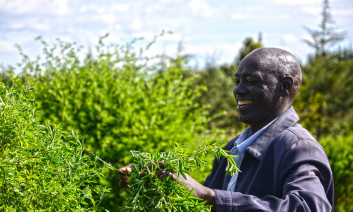
Our suffering planet looks set on a path of destruction, according to many. But leading thinkers gathered at the World Agroforestry Centre’s annual Science Week see the possibility of a bright, and sustainable, future Earth with secure land rights and agroforestry at its core, says Robert Finlayson
Every year, most of the World Agroforestry Centre’s 300-plus scientists gather in Nairobi, Kenya, to discuss their research methods and findings from projects in 38 or so countries around the world. The week-long event ended this year with a panel of distinguished guests discussing what is needed to create a future, sustainable Earth.
The panel was part of a contribution to the Future Earth initiative. The questions, ‘What is this future Earth? What does it demand of all of us? What can we identify as a path to progress?’ were put by the moderator, Dr Ravi Prabhu, the Centre’s deputy director-general research.
The first to respond was Achim Steiner, executive director and under-secretary-general of the United Nations Environment Programme, who argued that we needed more research into sustainable production landscapes. And to make such landscapes a reality, decision makers needed to receive more information that was relevant for implementation. So the real question was what could we do to make sure that people were properly informed and motivated to act?
For Steiner, the current age focuses on the ‘production maximisation curve’ but rather than exploit resources we need to manage systems if we are to feed 7 billion people without destroying ourselves in the process.
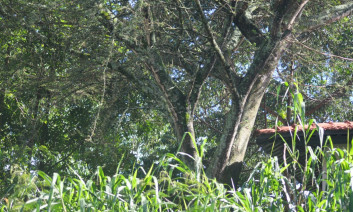
The word ‘Acacia’ returns about 25 million results from an online search. The same genus name, entered in the newly launched Agroforestry Species Switchboard, produces a list of the 629 species names containing ‘Acacia’, easily navigable with links to further information from over a dozen globally renowned databases. Acacia are among the 22,212 useful tree, shrub and related plant species listed searchable from this new information gateway on the World Agroforestry Centre (ICRAF) website.
“The Switchboard’s main strength is that it shortens the time and energy spent on searches, and generates quality information drawn from trusted sources,” says Roeland Kindt, the senior ecologist at ICRAF who led the development of the tool. “Its creation was driven by a need expressed by users, for a “one-stop-shop” for good quality and detailed information on species of interest,” says Kindt.
The work was funded by the CGIAR Research Program on Forests, Trees and Agroforestry, and during the development of the tool, most of ICRAF research divisions, known as Science Domains, were involved.
The 13 websites the Switchboard links to include The Plant Resources for Tropical Africa, The Useful Tree Species for Africa, Tree Seed Suppliers Directory, The UNEP-WCMC Species Database, and The VECEA interactive vegetation map. In addition to directly harnessing information from these 13, the switchboard also provides hyperlinks to The Plant List, Tropicos, Royal Botanic Gardens, Kew, and The Global Biodiversity Information Facility.
“Before the Switchboard, you had to search for a particular species one database at a time. But now, multiple databases that list information on a particular species can be accessed in one go,” says Kindt.
“Because listings of species in databases only partially overlap, it is common to find little or no information on a particular species in one database, but plenty of it in a second or third database. So it makes sense to query multiple trusted sources of data on one web interface,” he states.
By harvesting information in this way, the user can find out detailed descriptions on a particular species, its uses, availability of its seed and seedlings, how suitable it is for growing in various ecological zones, as well as its photographs or line drawings.
Read article here
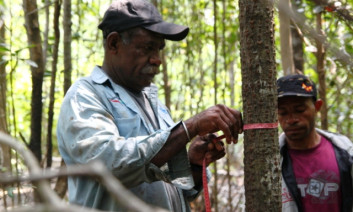
Farms, estates and other land uses produce food and other benefits but they can also produce greenhouse gases. To reduce these, Indonesia is working with the World Agroforestry Centre to implement land-use planning for low-emissions development strategies, say Sonya Dewi, Feri Johana, Andree Ekadinata and Putra Agung in a new policy brief
Agriculture and forestry generate food, building materials and economic returns, amongst other things of crucial importance to human wellbeing. However, they often also generate emissions of greenhouse gases and contribute significantly to global warming. Yet they have the potential to absorb carbon dioxide and mitigate climate change.
If not properly planned, trying to stop such emissions by halting deforestation or changing agricultural practices can restrict economic growth and threaten the security of food supplies.
We have found that a ‘landscape approach’—rather than one-off, site-specific interventions—can more effectively reduce emissions while maintaining development targets. This is because in any given area decisions about how land is used—and therefore what emissions are produced—are made by a complex web of people with differing motivations. We call this approach ‘Land-use planning for low-emission development strategies’ or LUWES.
Using this approach with local governments to plan how land is used is critically important because it is in local villages and farms that agriculture and forestry—and any associated emissions—take place. In complex landscapes that are home to diverse and perhaps conflicting groups, an inclusive, integrated and informed planning process is much more likely to reduce emissions than a ‘top–down’ approach.
Read full article here
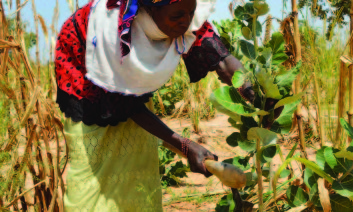
Drylands occupy 40% of the earth’s land area and are home to 2.5 billion people – nearly a third of the world’s population. People in dry areas are forced to contend with severe environmental degradation and increasing climate variability, as population soars. A groundbreaking paper heralding a new integrated systems approach to agricultural research in the drylands, was published in the journal Food Security this week .
This is good news for 400 million people in the developing world who depend on dryland agriculture for their livelihoods. But what is new?
To begin with, the authors distinguish between households with a low asset base, whose livelihoods are dominated by vulnerability, and those with a stronger asset base. For the first group the priority is to reduce vulnerability and improve their resilience whereas the second group are well placed to benefit from sustainable intensification, focused on improving productivity per unit of land and water. “In reality, households are spread along a continuum from low to high resilience and productivity,” said Fergus Sinclair, Science Domain Leader at the World Agroforestry Centre (ICRAF), and one of the authors of the paper,
“But, there is a threshold of vulnerability that you have to cross before people are able to invest in increasing productivity, rather than protecting themselves from the sort of catastrophic collapses that we saw affecting close to 10 million people in the Horn of Africa in the 2011 drought.”
The paper proposes an approach to research for development that integrates action horizontally (across sectors) and vertically (across scales) all along impact pathways, from research activity, through outputs (new research findings), outcomes (how the findings are applied to change what extension, development partners and policy makers do), and impact (improved food security and nutrition, reduced poverty and enhanced environmental integrity in the drylands).
Click here for the full article
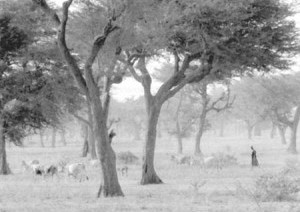
In the agroforestry parklands of the Sahel, generations of farmers have integrated crops, livestock and trees. With increasing pressure on natural resources to provide fuel, food and fodder for a growing population, farmers and scientists are looking at how these systems can best be intensified to increase productivity.
“Trees, crops and livestock all benefit from each other in the parkland farming systems of countries such as Burkina Faso and Mali,” explains Jules Bayala, Senior Scientist in Ecophysiology with the World Agroforestry Centre. “But to ensure all components are as productive as they can be relies on better integration and increased knowledge about the dependency, competition and complementarity of each element.”
In the agroforestry parkland farming system, livestock – cattle, sheep, goats, pigs, camels, donkeys and foul – are kept as a source of food, transport, power and cash. During the dry season, livestock freely browse in the parklands, providing manure that improves soil fertility and helps nourish trees and crops. Livestock also disburse the seeds of trees and sometimes break seed dormancy.
Click here for the full article
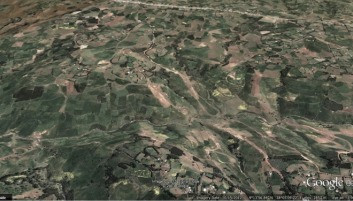
One small change of words is a giant leap in the effectiveness of agricultural research and development.
The race is on to find sustainable ways of producing enough food to feed the world over the next three to four decades. Over this time, population, and living standards for many people, are both set to rise, creating a burgeoning demand for food, at the same time as pressures on land and ecosystems threaten supply. A new article, just out in Current Opinion in Environmental Sustainability, tackles the thorny question of how to ‘scale up’ the use of sustainable intensification options so that they are available to large numbers of smallholder farmers.
There have been a number of high profile calls to scale-up agroforestry as a means to produce more food and fuel in an environmentally sustainable way. Jerry Glover of USAID set out the stall for perennial agriculture in Africa, in a piece in Nature last year: Agriculture: Plant perennials to save Africa’s soils. Olivier De Schutter, the UN Special Rapporteur on the right to food, recently made the case that agroecology can feed the world, and even Bill Gates, quoted on the sleeve of Gordon Conway’s 2012 book ‘One Billion Hungry: Can We Feed the World?’ says “we will need to help smallholder farmers sustainably increase their productivity.” Sustainable, ecological or agroecological ‘intensification’, are the new buzzwords in the corridors of aid agencies and government ministries, and Brian Keating has rekindled interest in agricultural systems thinking under a banner of ‘eco-efficiency’.
Click here for the full article
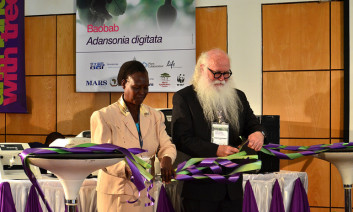
Hearty applause mingled with the sound of drumbeat at the World Agroforestry Centre (ICRAF) as the African Plant Breeding Academy came into being shortly after midday on 3 December 2013. The Academy, an initiative of the African Orphan Crops Consortium (AOCC),[1] is hosted by ICRAF and will be used to train around 250 African scientists in the latest biotechnological techniques to optimize the yield and nutritional content of 100 important but little-researched edible crops and trees native to Africa. Grown widely on farms, the improved varieties will help address the serious challenge of poor health caused by chronic malnutrition and recurrent episodes of hunger among Africa’s populations, especially the rural poor.
Professor Onesmo ole MoiYoi, the event’s keynote speaker, was emphatic: “We have to get serious about getting people out of episodes of starvation,” he said. Ole MoiYoi, chair of the Kenya Agricultural Research Institute Board, discussed the many dangers of poor nutrition in mothers, babies, and young children. These include an acquired predisposition to life-threatening conditions like coronary disease, hypertension, certain cancers, and even schizophrenia, later in life. “Imprinting during fetal development commits an individual to develop traits that can be passed on to grandchildren,” he stated, citing observations from Europe and China.
Click here for full article

Are you familiar with things like "Twitter", "Facebook", "blogging", "vlogging", "podcasting",…? Join us! Or if those words sound like gibberish to you, well… You are welcome too!
Experienced social media users, professionals, volunteers, journalists as well as beginners are equally welcome in the social media team of the World Congress on Agroforestry (WCA2014) held in Delhi – India, on February 10-14 (2014)…
We are assembling a large team of social media volunteers to support the conference. The volunteers can participate either online, or at the event itself. We are offering a free two days' social media training course for all onsite volunteers.
So join our online group of social media volunteers, or our onsite social reporting team!
Join our social reporters volunteering team:
This team is a mixture of professionals and young volunteers. Some work for the organisations participating in the WCA2014 and others work for our partners or other organisations. Most of our social reporters, though, are social media enthusiasts, who contribute to our social media outreach through their own networks.
Some of our volunteers are present at the forum itself, but most are supporting us remotely in various social media activities, ranging from writing or editing blogposts, uploading videos and pictures, spreading different content pieces via Twitter, Facebook,..
Our social reporters coordinate their activities via a Google Group discussion forum, and have already started their work for the event. Each contributes whatever they can into the discussions, dependent on their time availability, expertise and eagerness…
The real exciting part is "while doing, we learn": having such a large and diverse social reporting team, gives us a wealth of experience, which allows our social reporters to learn from each other.
You don't have to fulfill any criteria to be part of our social reporting team, other than being enthusiastic about our causes: agroforestry, forestry, agriculture, sustainable development, food security, natural research management, …
Even if you can't come to the event itself, you can still participate online. You'll be able to contribute to the group's discussions, help with the social media outreach, or even report via one of our live webcasts!
Interested? Send our social media coordinator an email: Peter Casier – p.casier(at)cgiar(dot)org – and we'll plug you into our team!
Join our onsite social reporters team, register for the free social media training!
If you are coming to the conference itself, we're happy to integrate you into our social media team, reporting live from the Congress!
To help you prepare, we are giving a free social media training for all volunteers on Feb 8-9 at the WCA2014 venue.
The training will cover:
- an overview of all social media tools, and their use within a professional environment;
- an overview of how to pull all these tools into a strategy;
- hands-on introduction in two key tools we will use for social reporting at WCA2014: Twitter and blogging;
On Feb 9th, the training will conclude with a meeting of all onsite social reporting volunteers.
The training is free, and open to all social reporting volunteers (congress participants, students, scientists and staff from partners etc..).
Interested in joining our social reporting team? Email our social media coordinator: Peter Casier – p.casier(at)cgiar(dot)org and we will enlist you on our e-discussion group.
In your mail, please mark clearly if you want to participate in the training, as the number of seats is limited!
For more information just email Peter and he will be happy to assist you.
Picture courtesy: Jason A. Howie