Vigyan Bhavan & Kempinski Ambience
10 - 14 February 2014
Delhi, India

Blog Archives For Blogs Tagged

Dennis Garrity speaks at WCA2014 in Delhi, India. Photo by Daniel Kapsoot/ICRAF
On the closing afternoon of the World Congress on Agroforestry 2014, participants from South Asia, East, West and Southern Africa came together to plan on how to dramatically scale up the use of trees in cropping and grazing lands of smallholder farmers across the world.
Dennis Garrity, Chair of the EverGreen Agriculture Partnership and UN Drylands Ambassador, emphasized the need to “embed these ideas into the hearts and minds of the ‘hard-core aggies’.”
Once the idea has been taken on by organizations working daily with farmers in mainstream conventional agriculture, large-scale adoption will become achievable, said Garrity.
Representatives from across Africa and South Asia heard about successes and the progress made so far in establishing partnerships and demonstrating agricultural approaches that integrated trees into farm fields.
To date, about a hundred thousand women farmers in Malawi are growing Gliricidia sepium for fodder for their livestock and nutrients for their soil. And emerging partnerships in East Africa are easing the sharing of knowledge and experiences with systems like conservation agriculture with trees.
But in order to share the benefits of these approaches further, the group made a unanimous call for greater collaboration and partnerships with groups such local radio stations, education institutions and NGO consortiums at both a national and global scale. By working with institutions such as these, science-based solutions such as EverGreen agriculture can be shared more widely, adapted locally and extended to farmers, often by farmers across enormous scales.
For each region, many methods and opportunities to take this scaling up further were identified, and the partners at the event drafted actions plans.
“In India in particular, the opportunities to accelerate scaling up are extensive. And we have exciting opportunities in many of Africa’s regions,” said Garrity.
While funding was raised as a challenge in some regions, the meeting agreed that with organizational commitment, you can move forward with what is available.
In Dennis’s words: “Good ideas, and good programs are the basis for good funding”.
“It is all about partnerships, bringing science to development, and shaking hands with development partners as we move forward together.”
By Alice Muller
EverGreen Agriculture Partnership Manager
Related stories
We need Steve Jobs’ in agroforestry
Where good science and the art of innovation meet
—
For more information: www.worldagroforestry.org
Evergreen Agriculture web site: www.evergreenagriculture.net
Email: d.garrity@cgiar.org and a.muller@cgiar.org

The Western Ghats, India. Photo by Alosh Bennet
Coffee plantations are expanding fast at the cost of disrupting ecological systems. Coffee Agroforestry System (AFS) seem to have positive impact on environmental services; or do they?
Kodagu, located in the Western Ghats in India, produces 2% of the world’s coffee. The Western Ghats is one of the top ten biological hotspots in the world; over 137 species of mammals and 508 species of birds can be found here, including a sizeable population of majestic elephants.
Over the last 30 years, coffee has expanded tremendously in the region to the detriment of the forest and its dwellers. The intensification of coffee cultivation is also leading to the removal of shade trees which is directly linked not only to better growth of coffee but also to numerous ecological benefits. Water is another critical resource affected. The main rivers which provides water all over Southern India, originate from these coffee areas of the Western Ghats.
The tree composition of this coffee landscape has been affected by changes in farmers’ management practices, such as irrigation to stimulate coffee mass flowering, or introduction of exotic tree species (mainly silky oak) for timber production and pepper.
Speaking at the World Congress on Agroforestry WCA2014, Philippe Vaast, an eco-physiologist from ICRAF & CIRAD, said trees are important not only for providing shade but also for providing a microclimate for other organisms, but farmers are not adept at managing shade.
“The right amount of shade is important for coffee; too much or too little is harmful. This manipulation of shade is not done well or understood by farmers. A lot of work needs to be done in this area. ”
A project undertaken by ICRAF and partners studied for 3 years how the change in tree cover from predominantly native tree species to exotic species affected the water dynamics in coffee AFS of the Kavery watershed of Kodagu district, the most important coffee district of the region.
The research threw up a mixed bag of results: the native trees were better than exotics in terms of providing optimum shade and a better environment for coffee growth, but the exotic trees were superior in recharging aquifers.
According to Syam Viswanath, a scientist at Indian Council of Forestry Research & Education (ICFRE), two important factors have to be taken into account for coffee agroforestry system: yield and quality.
“The kind of tree a farmer finally plants on his farm is a result of many factors: growing speed, maintainability, robustness, economic value or simply its attractiveness to an elephant!”
By Nitasha Nair
Ms Nair is a Senior Communication Officer with the International Water Management Institute (IWMI) – India
—
For more Congress blogs, please visit http://www.wca2014.org/blog/
For even more agroforestry-related blogs, please visit http://blog.worldagroforestry.org/
Congress on Twitter: #WCA2014!

Children in the Kattupakkam Centre during the drawing competition
One of the key pre-congress activities related to World Congress on Agroforestry 2014 was a painting and essay-writing competition for schoolchildren. The objective of activity was to promote a love for trees and nature in the young generation, so they can develop into citizens conscious of their duty to care for the environment. Similar to the Congress, the theme of the competition was ‘Trees for Life.’
The competition had two categories: a painting competition for 6 to 12-year-olds and an essay competition for 13 to 18-years-olds.
It was well publicized through announcements on the official web pages of the Indian Council of Agricultural Research (ICAR), New Delhi, and the National Research Centre for Agroforestry (NRCAF), Jhansi. Information on the competition was also displayed on Facebook pages and sent to the pan-India database of more than 264 schools, 25 State agricultural universities countrywide, and to the officers-in-charge of coordinating centres of the All India Coordinated Research Project on Agroforestry (AICRP). The competition was also publicised in the NRCAF newsletter.
The competition recorded an overwhelming response, with the participation of children from 18 States: Assam, Andhra Pradesh, Andaman & Nicobar Island, Chhattisgarh, Gujarat, Haryana, Karnataka, Maharashtra, Manipur, Meghalaya, New Delhi, Orissa, Punjab, Rajasthan, Tamil Nadu, Uttar Pradesh, Uttrakhand and West Bengal. About 56 per cent of the participants were girls.
The entries were judged by an independent jury.
The President of the Indian Society of Agroforestry Dr Shiv Kumar Dhyani announced the results on 15 January 2014. He congratulated the winners, their parents and teachers, and thanked all the children who participated in the competition.
The winners of essay competition are:
- 1st Prize: Km. Nisitha Pattanaik, daughter of Shri Kshitish Chandra Pattanaik. Bhubaneswar, Odisha
- 2nd Prize: Mr. V.S. Naveen Kumar, son of R. Saravanan. Karamadai, Dist.- Coimbatore, Tamil Nadu
- 3rd Prize: Mr. Prashant Kaushik, son of Shri J.L. Sharma. Mathura , Uttar Pradesh
The winners of painting competition are:
- 1st Prize: Km. V. Niharika, daughter of S. Varada Rajan.K.K. Pudur, Coimbatore, Tamil Nadu
- 2nd Prize: Km.Bidyasha Harichandan, daughter of Benudhar Harichandan. IRC Village, Bhubaneswar, Odisha
- 3rd Prize: Km. Vaishvi Shah, daughter of Dr. Sarvesh Kumar Shah. SDAU, Sardarkrushinagar, Gujarat

V. Niharika’s prizewinning illustration
of the role of trees in our lives
(Click on the picture to see the full size drawing)
Km. Nisitha Pattanaik from Bhubaneswar, who won the first prize in the essay competition, elaborated in a very interesting and emphatic way the role of trees in our lives and the future of human and animal life on earth, as well as the need to conserve our environment and biodiversity by saving trees and forests. Similarly, the first-prize winner in the painting competition, Km. V. Niharika from Tamil Nadu, illustrated the role of trees in our lives in a very beautiful and colourful way.
The winners of the competition will receive their prizes and certificates from the Honorable President of India, as part of the Congress opening ceremony at Vigyan Bhawan, New Delhi, on 10 February 2014.
The organizers of the World Congress on Agroforestry congratulate all the winners and look forward to being part of one of their proudest moments, in Delhi!
Blogpost and illustration with thanks to Dr A K Handa
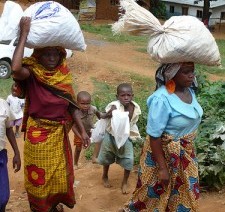
Farmers producing small quantities of a particular crop or tree product face the challenge of selling it at fair prices, and one effective way to improve matters is ‘collective action’ for marketing. If done right, much can be gained in terms of increased income and food security when smallholder farmers come together and pool their harvest, selling it in bulk.
Nonetheless, collective action in marketing, particularly for small-scale farmers in Africa, is not as simple as it seems at first glance, as a new article shows. The review, published in the journal Current Opinions on Environmental Sustainability, synthesizes some of the lessons learned over two decades of implementing collective action, and provides some pointers for success.
Collective action has been defined as “Group activities that directly or indirectly enhance the production and marketing of agricultural and food products…” and “Action by members of a group or cooperative who come together to share market knowledge, sell together and develop business opportunities.”
Click here for the full article
Farmers producing small quantities of a particular crop or tree product face the challenge of selling it at fair prices, and one effective way to improve matters is ‘collective action’ for marketing. If done right, much can be gained in terms of increased income and food security when smallholder farmers come together and pool their harvest, selling it in bulk.
Nonetheless, collective action in marketing, particularly for small-scale farmers in Africa, is not as simple as it seems at first glance, as a new article shows. The review, published in the journal Current Opinions on Environmental Sustainability, synthesizes some of the lessons learned over two decades of implementing collective action, and provides some pointers for success.
Collective action has been defined as “Group activities that directly or indirectly enhance the production and marketing of agricultural and food products…” and “Action by members of a group or cooperative who come together to share market knowledge, sell together and develop business opportunities.”
– See more at: http://blog.worldagroforestry.org/index.php/2014/01/09/unity-is-strength-in-marketing-smallholder-agroforestry-produce#sthash.ywmwX3Xc.dpuf
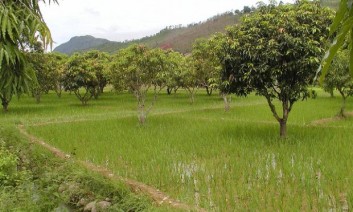
Indian farmer Om Prakash Shukul began planting trees on his farm after following an awareness programme on agroforestry in his community. He was more than happy to talk about his fruit tree-planting activities during an interview:
“I earn from the crop yields as well as by selling mangoes. I am very happy with the results,” he says in the below video.
Om Prakash hopes to earn an income from the mangoes for the next few years, and has in addition planted guava as a security, should his crops fail. By diversifying his farm and adopting this 'climate-smart' intervention, he feels better prepared to cope with erratic weather events and the challenges from the changing climate. And he is also earning an income along the way.
Growing mangoes has really impacted his life in a positive way, he explained during the making of the video.
Click here for the full article
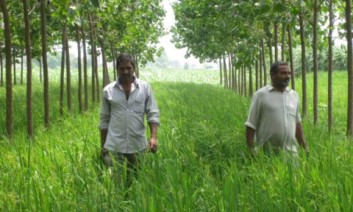
INDRI, HARYANA, INDIA — To anyone else, the patches of poplar and eucalyptus trees that dot the flat, green landscape of Indri are just added greenery. But to farmer Chaudhry Sukhvir Singh, the trees are a fixed deposit.
"The biggest benefit is that I can plant these trees and then earn other income on the side. It’s like money being put in the bank. Anytime I need money for anything, I can cut these down and get my work done," Singh said as he removed weeds near a young sapling.
In a few years, the 500 poplar trees planted on Singh’s property in the northern state of Haryana will eventually earn him $15,000 when they are mature, cut down and sold to local plywood factories.
The farmer is among several hundred who receive support and guidance from the Nairobi-based World Agroforestry Center. The organization promotes sustainable agriculture by encouraging farmers to plant trees that produce fruit, timber, biodiesel and rubber.
Click here for the full article
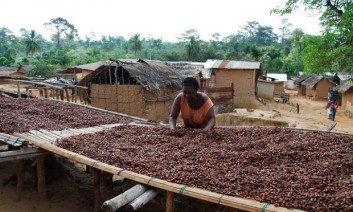
There is an interesting link between female empowerment, cocoa production and under-nourished children, a link which is not always visible at first glance.
You see, children growing up in areas that produce large quantities of cocoa tend to be stunted in growth and subject to higher rates of malnutrition compared to children in other, nearby regions. This is especially true for the Ivory Coast in West Africa.
Fighting under-nutrition in children is crucial. Not getting vital vitamins A:s, B:s and D:s early in life can have very negative consequences later on. For example, it has been shown that adults who were undernourished as children have 15 percent less cognitive capacity. This will affect a person for the rest of his or her life, and cannot be repaired by eating right later in life.
Click here for the full article
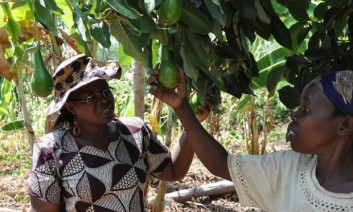
Almost 45 percent of the land in Sub-Saharan Africa is being cultivated. This means crops are being grown on almost half of the continent. In addition, agriculture employs 65 percent of the total population in the region, earning farmers both an income and food. So why then, are so many still going hungry each day?
We have heard the question before and we know that answers do not come easy.
Yet it was exactly these questions and answers which were explored at the World Agroforestry Centre's side event at the Africa Agriculture Science Week (AASW). During the session, panelists found themselves confronted by an audience who didn't hold back, as they spoke about the links between fruit trees and food security under the topic of ‘Agroforestry for food and nutritional security in Africa’.
Click here for the full article
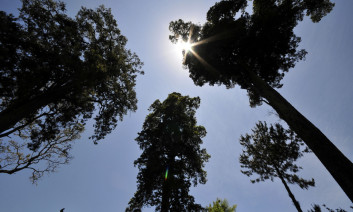
These challenges were recently addressed by Mbow and colleagues in an article featured in a special issue of Current Opinion in Environmental Sustainability (COSUST).
The authors highlighted a number of recognized benefits arising from the use of agroforestry in smallholder systems, such as enhancing soil fertility and improving household resilience through the provision of additional products for sale or home consumption.
Furthermore, with an increasing imperative for smallholder farmers to adapt to and mitigate climate change, agroforestry offers a cost-effective option of doing so. Many studies have shown that agroforestry practices can sequester carbon from the atmosphere and diversify rural livelihoods through the provision of ecological and economic benefits.
However, these benefits are often overshadowed by the challenges of establishing tree-based systems in areas marred by poor land use and lack of governmental oversight: while many smallholder farmers in Sub-Saharan Africa practice agroforestry, adoption has not been widespread and this may be attributed to the political and socioeconomic environment, or the farmers’ disposition towards trees on their farms.
These obstacles are compounded by the lack of support for tree-based systems through public policies, and this is something that requires shifts in regional and national-level institutional frameworks.
Click here for the full article
In the Lushoto District in Northeastern Tanzania, more than 60 percent of the land is eroded. Therefore farmers in the area have begun testing a portfolio of promising climate change adaptation, mitigation and risk management interventions to help turn this around. This is being done together with research and development partners, and government extension agents.
Agroforestry and land management are among the mitigation interventions used in Lushoto.
Agroforestry has both ecological and economic benefits. It can provide farming families with the ‘five Fs’: Food, Fuel, Fodder, Finance and Fertility. In a nutshell, by integrating trees in farms and rangelands, farmers reduce their dependency on a single staple crop thereby diversifying their livelihoods.
Sadick Selemani in Lushoto is a champion farmer with trees like Albizzia and Grevillea species along the boundary and across contours on his 1.5 acre farm.
“I recently harvested 10 trees for timber which I used for roofing my house. Additionally, I sold five trees for 125,000 Tanzania Shillings (US$ 80) and used the money to pay school fees for my children” he said.
Another champion farmer, William Dennis has Grevillea, Casuarina and Pinus tree species on his three acre farm.
“Climate variability will hasten degradation of soil and water resources. Therefore our local community members should use trees to cushion their farms from degradation and benefit from the income generated,” says William.
In addition to individual farmers, schools have participated in tree planting. Yamba and Kongei Primary Schools planted Casuarina species around the school to act as a windbreaker.
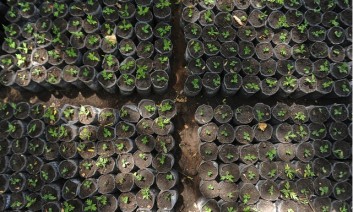
There is a surging demand for tree seedling which are in short supply, and Tanzania Forestry Research Institute (TAFORI) is spearheading farmer training to establish three tree nurseries; each under the management of three newly established umbrella community based organizations, with a combined capacity of producing 45,000 tree seedlings in a season.
The main partners for this work: include the CGIAR Research Programme on Climate Change, Agriculture and Food Security (CCAFS), Tanzania Forestry Research Institute (TAFORI), Selian Agricultural Research Institute (SARI), Sokoine University of Agriculture (SUA), World Agroforestry Centre (ICRAF), and Lushoto District Council.
Each partner contributes their expertise to specific interventions, integrating these within existing community institutions and organisations.
The partnership has revived private tree nurseries that were dormant, making them able to supply 17,000 tree seedlings in the 2012 long rain season and 15,000 tree seedlings in the 2013 long rain season. At least 250 male and 150 female headed households have each planted 60 tree seedlings in the past two years. The tree planting also responds to a policy by the Lushoto District Council requiring a 10 percent tree cover on all farms.
Soil erosion is rampant in two annual rainy seasons in Nyando, and run off forms deep gullies that affect about 40 percent of the landscape which has negatively affected agriculture and food security.
To tackle these problems, people in Nyando have organized themselves into self-help groups covering 1,200 households. The majority of the active members are women.
The community-based organisations have partnered with CCAFS, World Agroforestry Center (ICRAF), CARE International, World Neighbors, VI-Agroforestry, Kenya Agricultural Research Institute (KARI), Ministry of Agriculture, Livestock and Fisheries (MALF), and Ministry of Environment, and Natural Resources (MENR) to increase tree cover on farm.
The partnership has supported 25 tree nurseries, with a capability of producing 80,000 high quality tree seedlings in a season. The number of tree nurseries as well as their capacity has increased five times compared to five years ago. With a survival rate of 75 percent, the on-farm tree population has increased by at least 150,000 trees within five years.
—By John Recha, Philip Kimeli and Vivian Atakos
—
Learn more: Empowering a local community to address climate risks and food insecurity in Lower Nyando, Kenya
Related journal article: Are food insecure smallholder households making changes in their farming practices? Evidence from East Africa
Access baseline surveys for the CCAFS Learning sites: Baseline Household Surveys 2010-2011
John Recha is a Participatory Action Research specialist, Philip Kimeli is a Research Assistant and Vivian Atakos is a Communication Specialist. All members of the CCAFS East Africa team. Follow East Africa on Twitter: @Cgiarclimate_ea
This article is published here with permission from CCAFS, the CGIAR Research Program on Climate Change, Agriculture and Food Security. A full version with links to multimedia is available on the CCAFS blog.